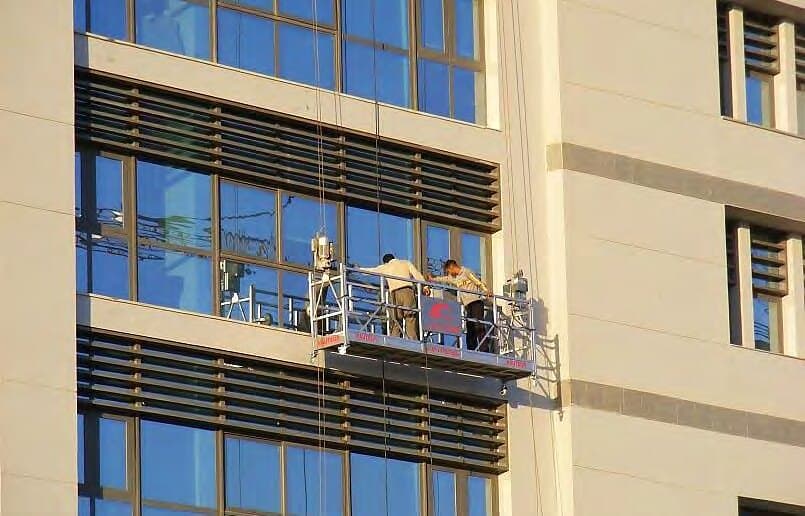
Fixed-Base & Telescopic Systems
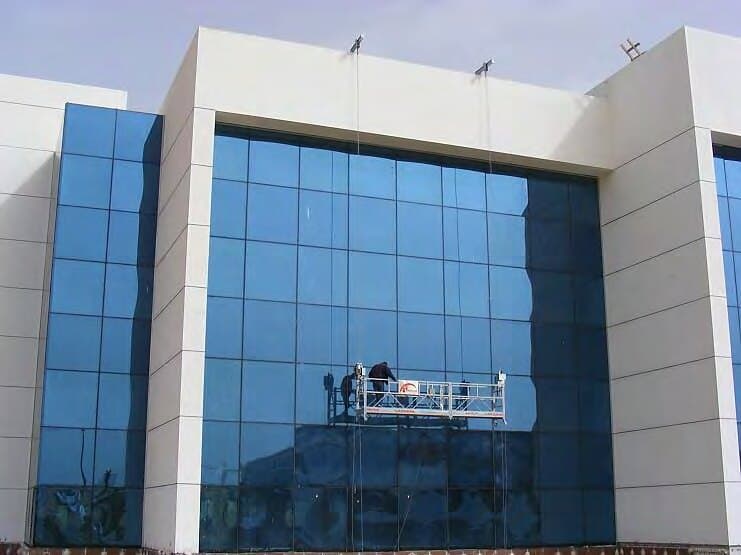
Fixed-base systems suspend a cleaning cradle from outriggers anchored at the roof edge. Telescopic suspension adds reach where the parapet or façade line requires it.
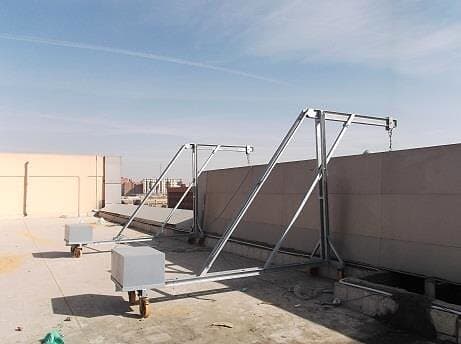
On mid-rise buildings with regular elevations, fixed-base arms at planned positions along the roof edge can serve the façade without a roof car. The cradle is moved between positions and suspended from the next pair of arms.
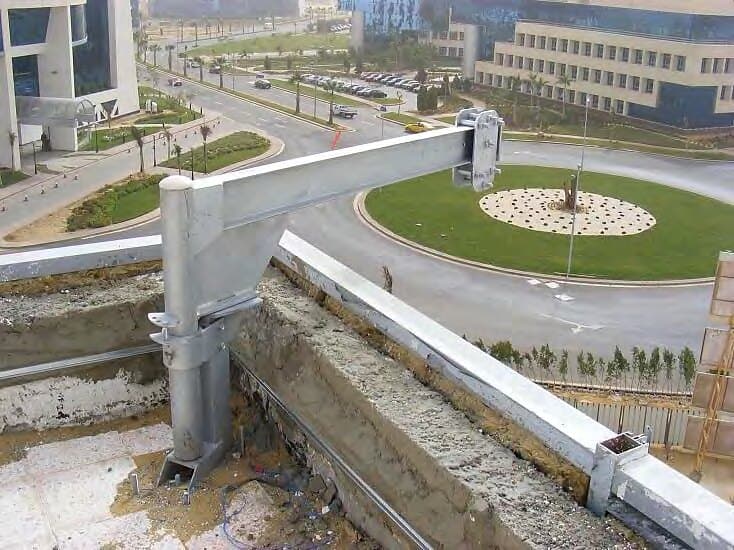
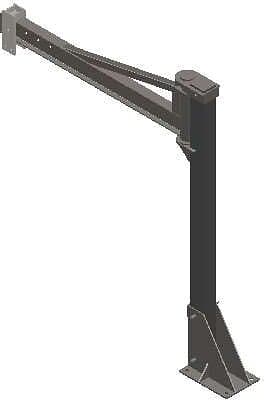
Telescopic suspension
For two National Bank of Egypt branches — El-Sabeen and El-Teseen — Hauteur supplied and installed telescopic suspension systems that extend the suspension point over the façade line.
Selected projects
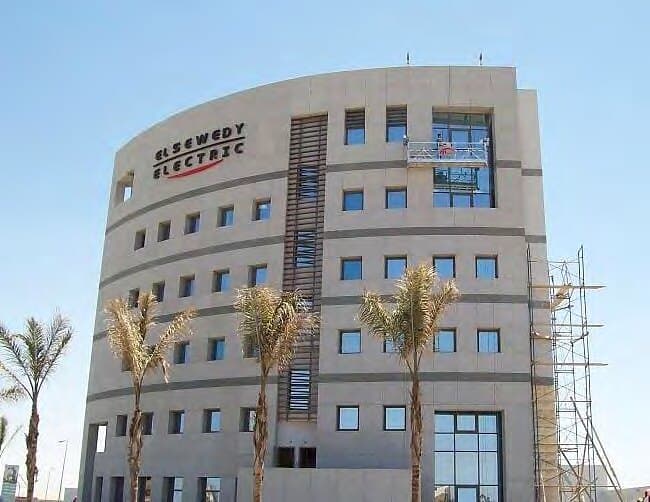
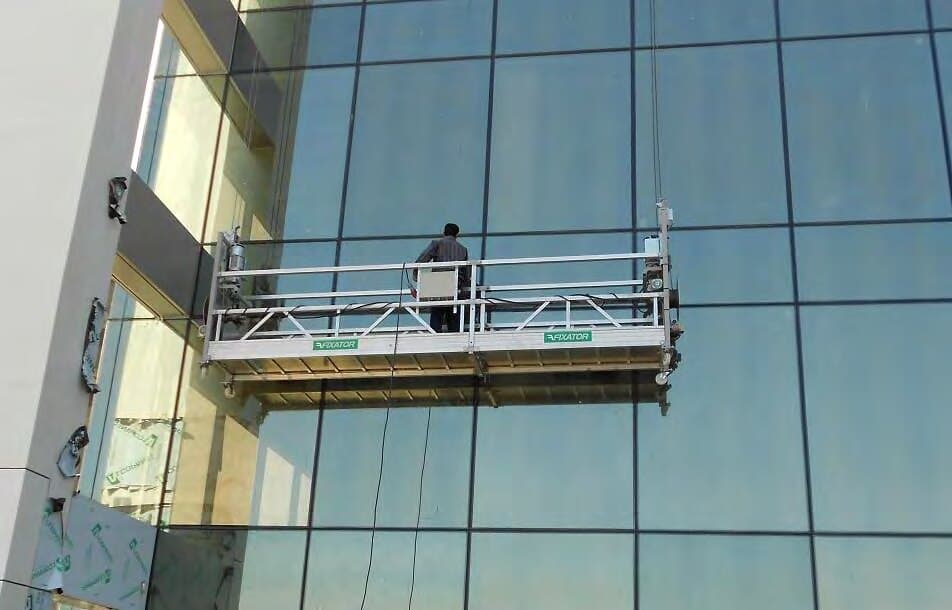
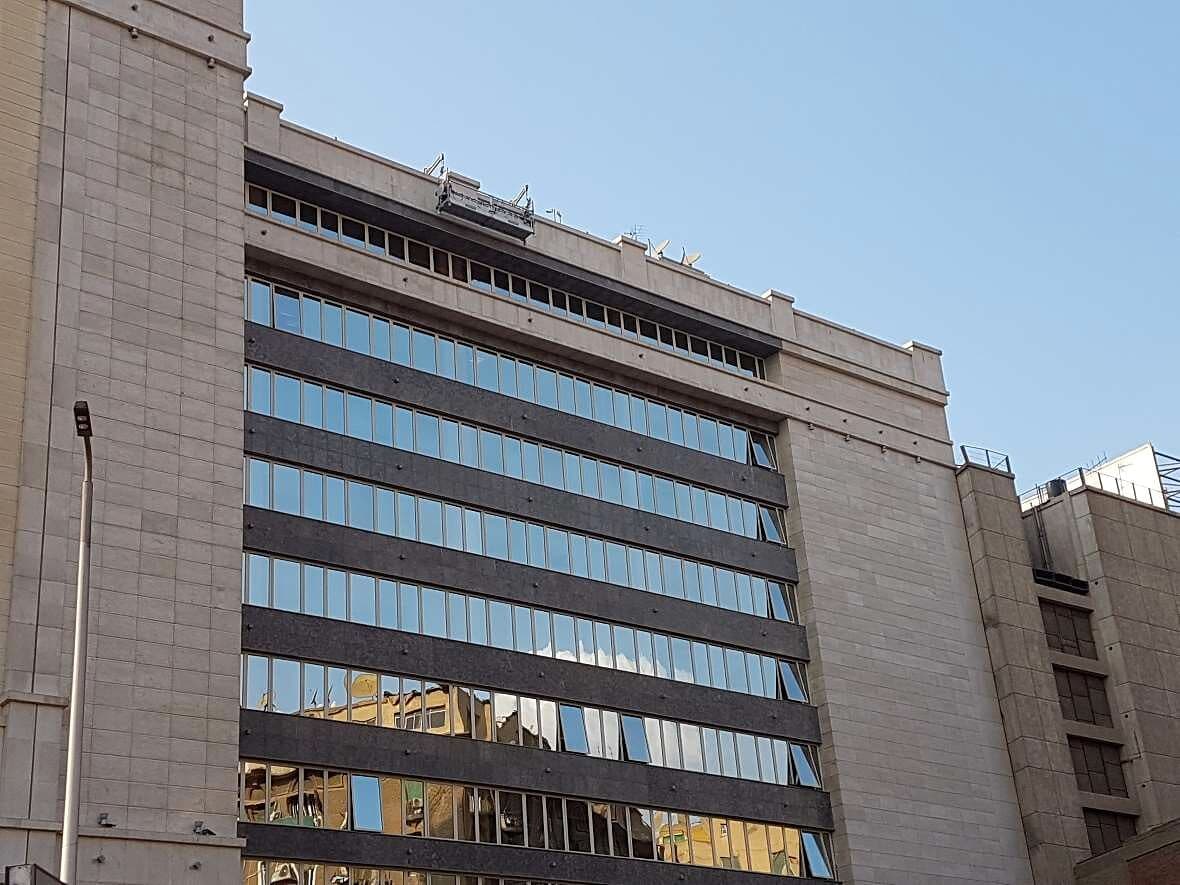
Hauteur's portfolio of façade-access projects: monorails, roof cars, davits, fixed-base systems, custom cradles and special access across Egypt.
Download· PDF · 11.5 MB
Roof plan, typical sections and elevations, building height and number of floors, façade materials and any roof equipment or set-backs. Early drawings are enough to start system selection; details are refined as the design develops.
As early as possible — ideally during design development. Rails, sockets, anchors and roof loads affect the structure, the parapet and the roof finishes, and are far simpler to integrate before construction.
Share the roof plan, elevations and building height. A Hauteur engineer will review the façade and recommend an access strategy.
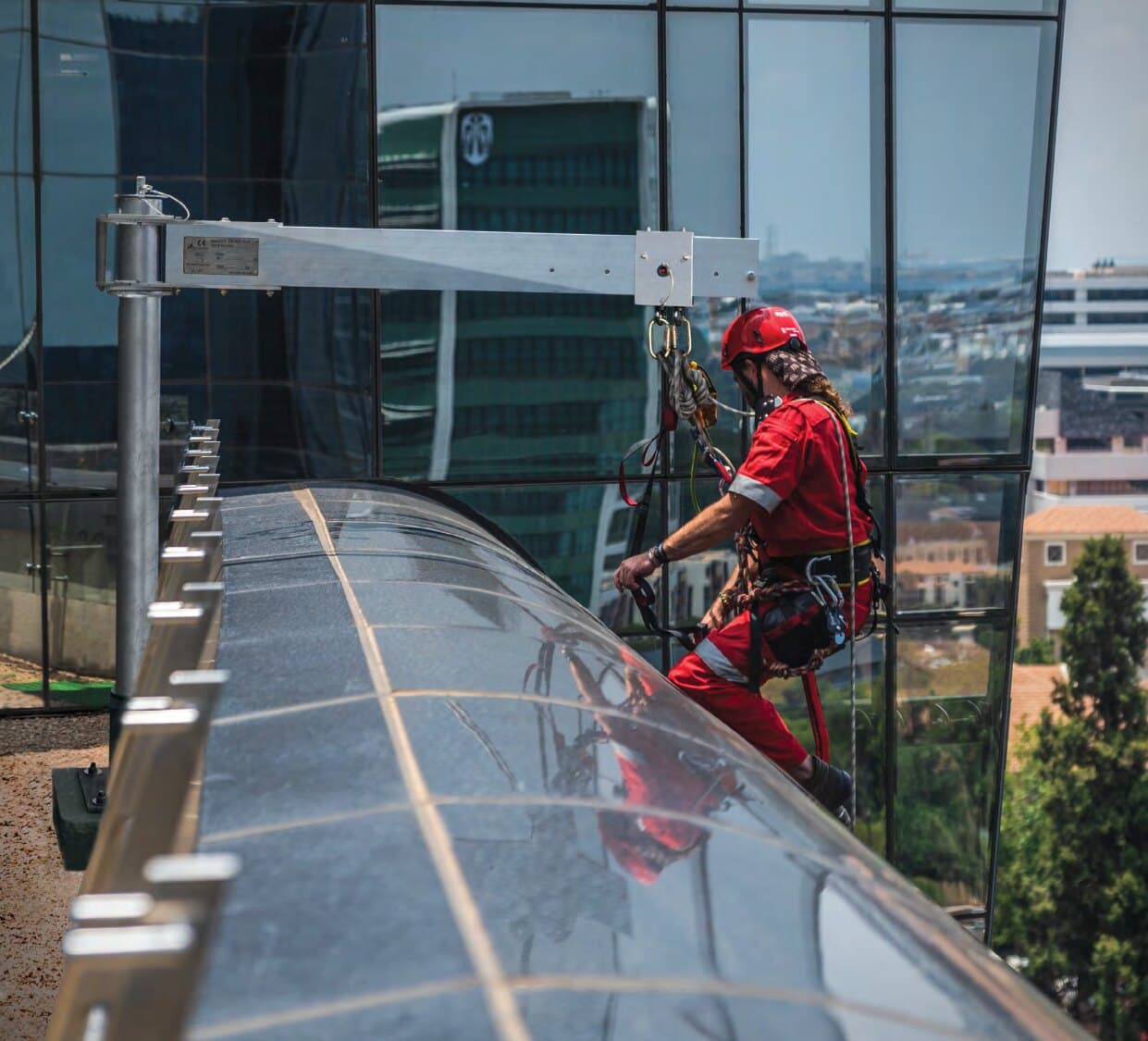
A removable davit is fixed to permanent sockets on the roof perimeter to suspend a worker for façade cleaning or maintenance. At the end of the work, the davit is dismantled and stored.
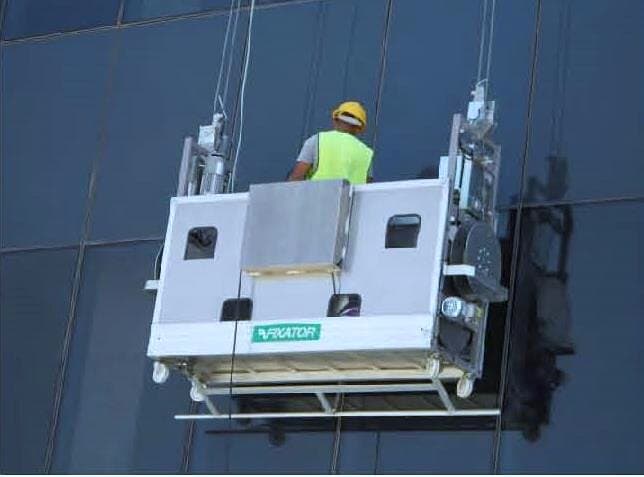
The cradle is where the work happens. Its length, controls and suspension are chosen to suit the façade, the task and the system it hangs from.
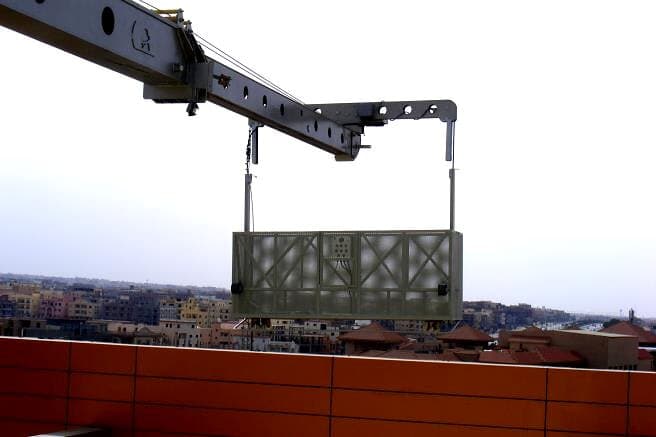
A roof car travels along a guide rail around the roof and lowers a cradle from its jib to any drop on the façade.