
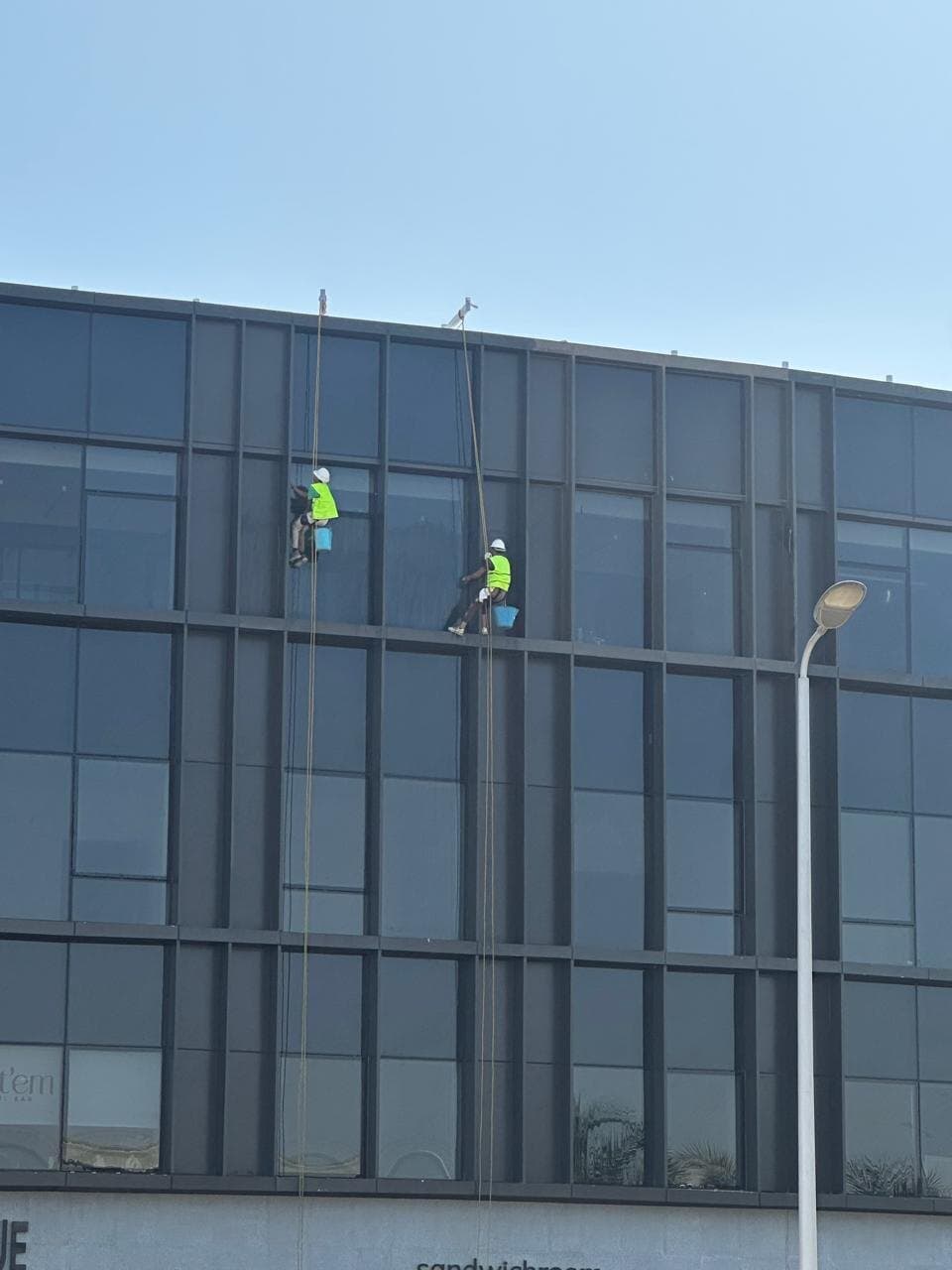
Rope Access Systems
Rope access lets trained technicians reach façades directly on two independent ropes. The system on the roof decides how safely and how efficiently they can work.
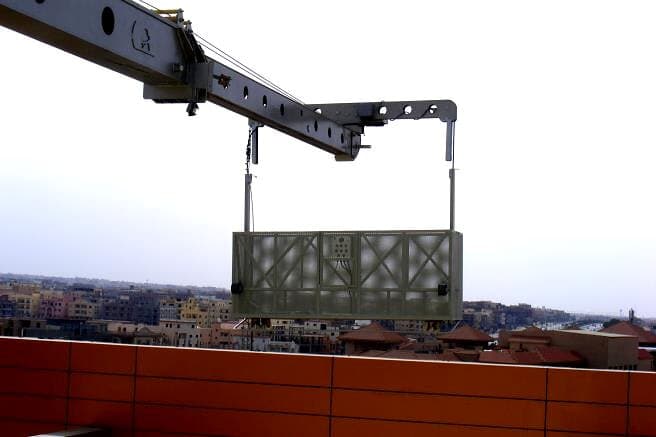
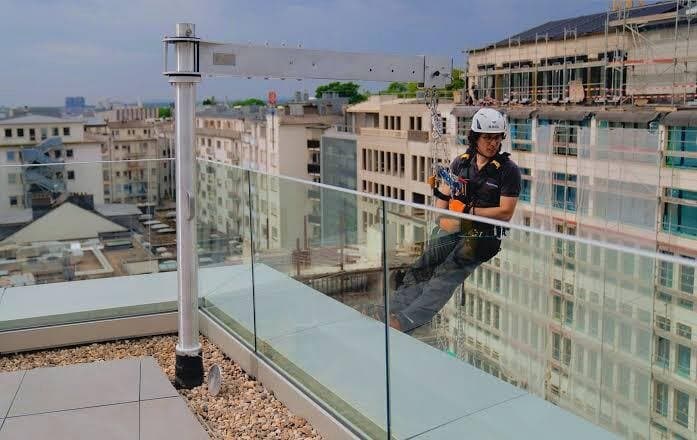
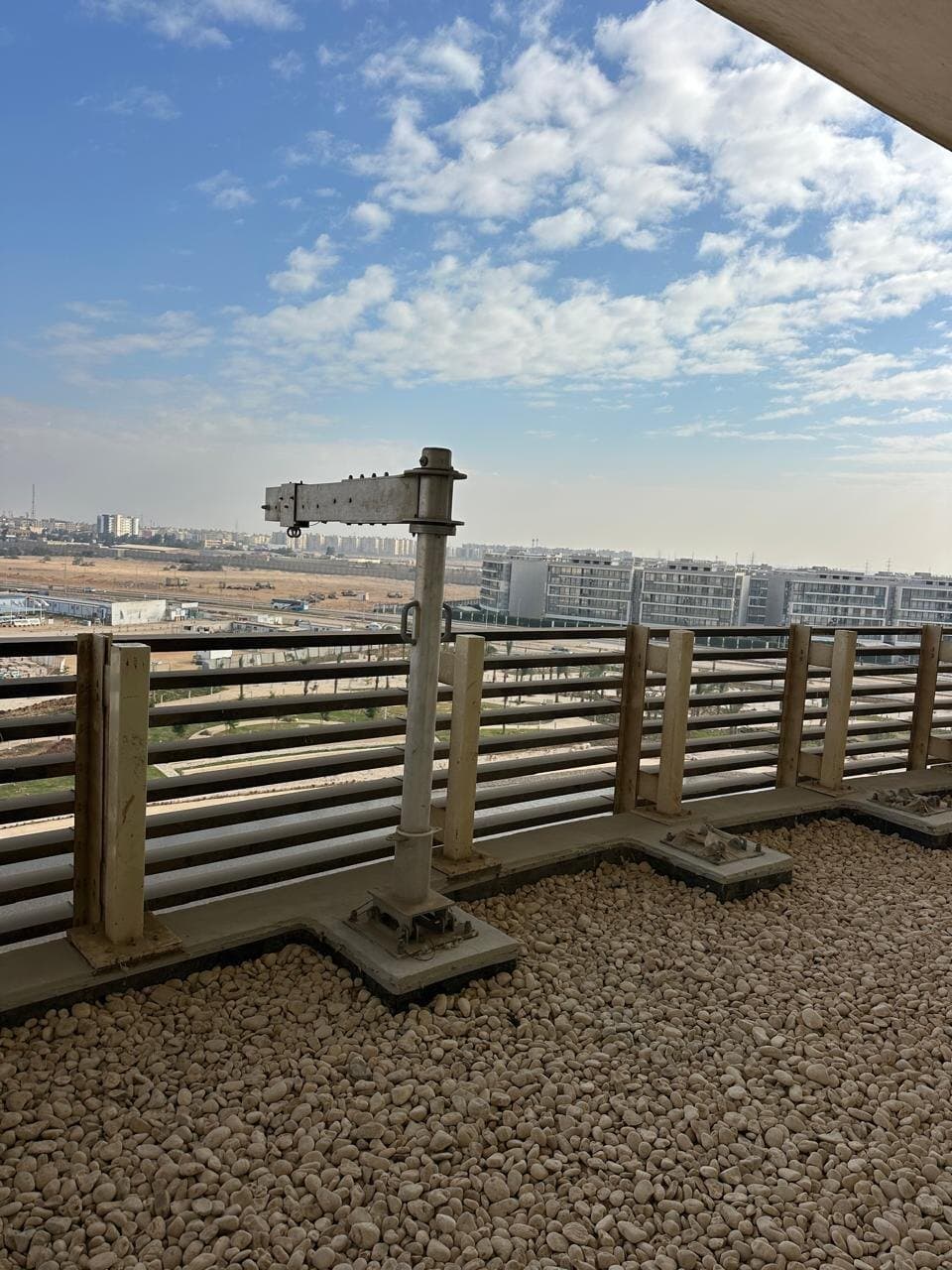
Each technician hangs on a main rope and an independent safety rope from a davit or anchorage above. The davit reaches over the parapet so the ropes fall clear of the edge, and the sockets on the perimeter let the team move from drop to drop around the building.
The recommended minimum distance between the façade and the suspension point is 300 mm for rope access and rope-climber equipment, and 600 mm when a one-person cradle is used.
From survey to service
Façade geometry, protruding elements, parapet and waterproofing.
Socket positions and spacing set by the façade and the tasks.
Bases fixed and sealed; davits supplied and checked.
Periodic checks of davits, sockets and anchorage.
Selected projects
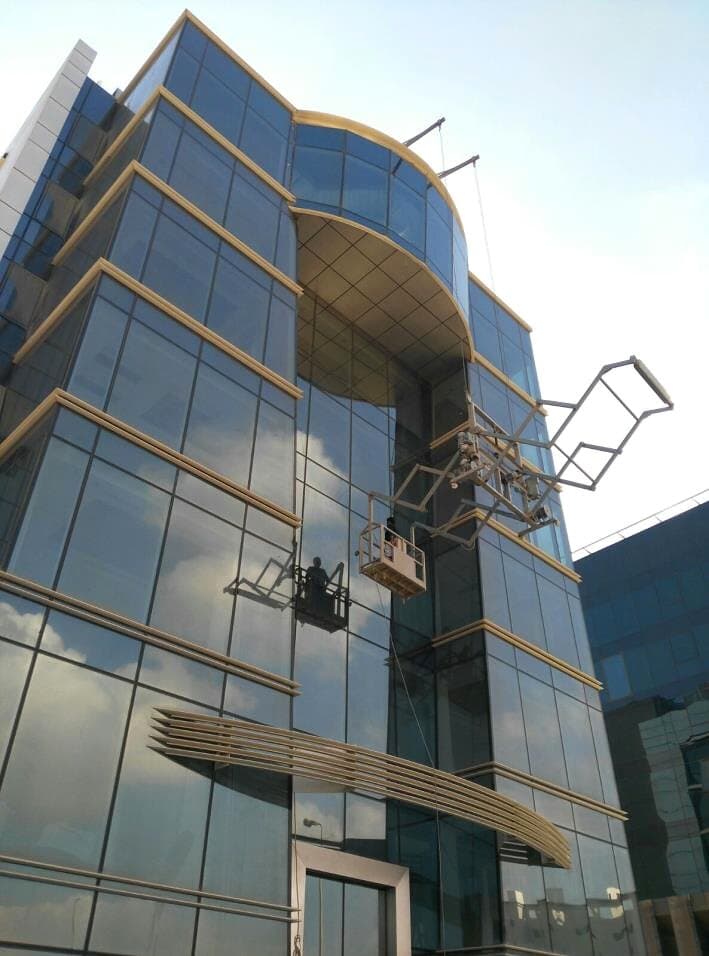
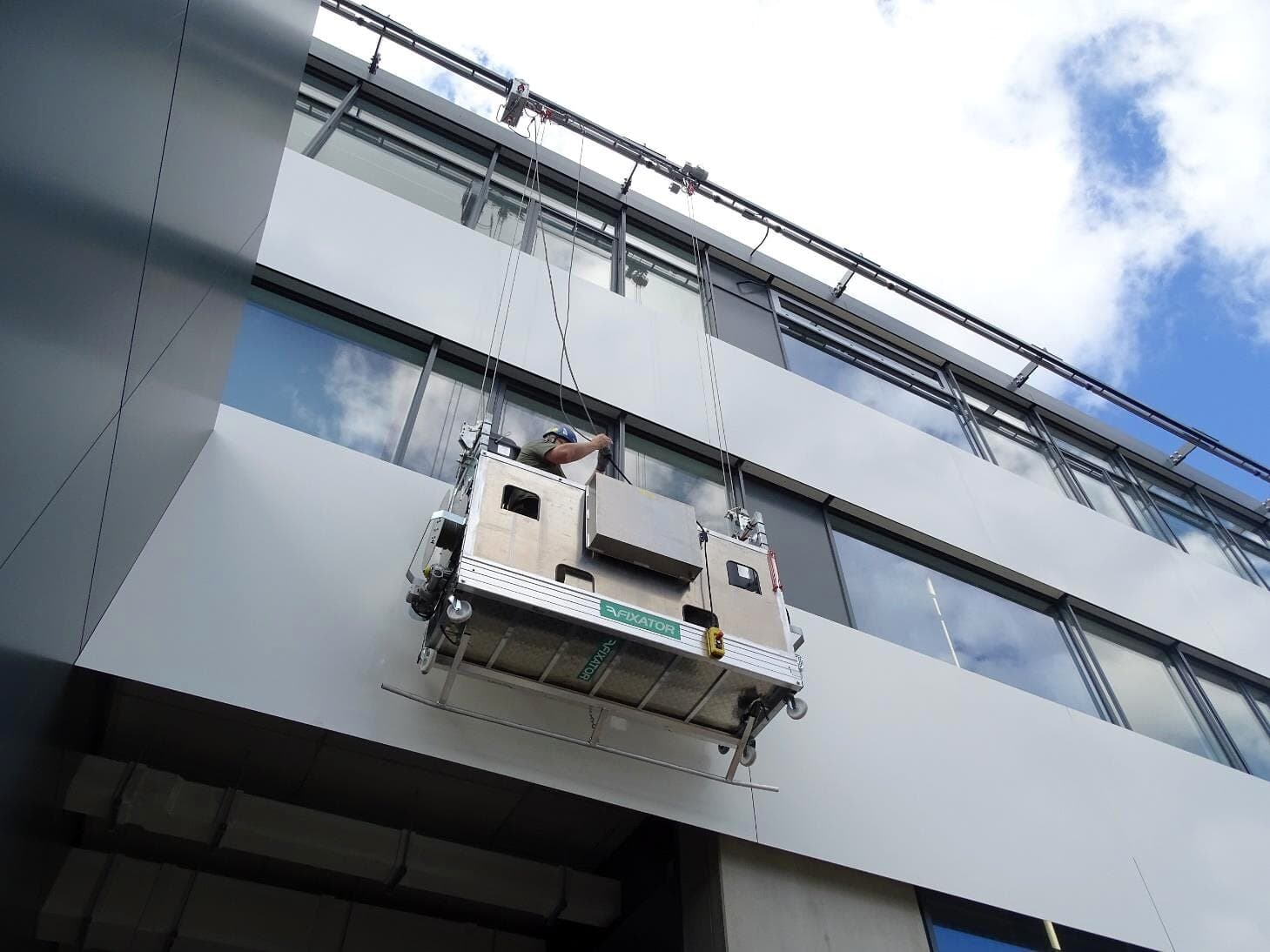
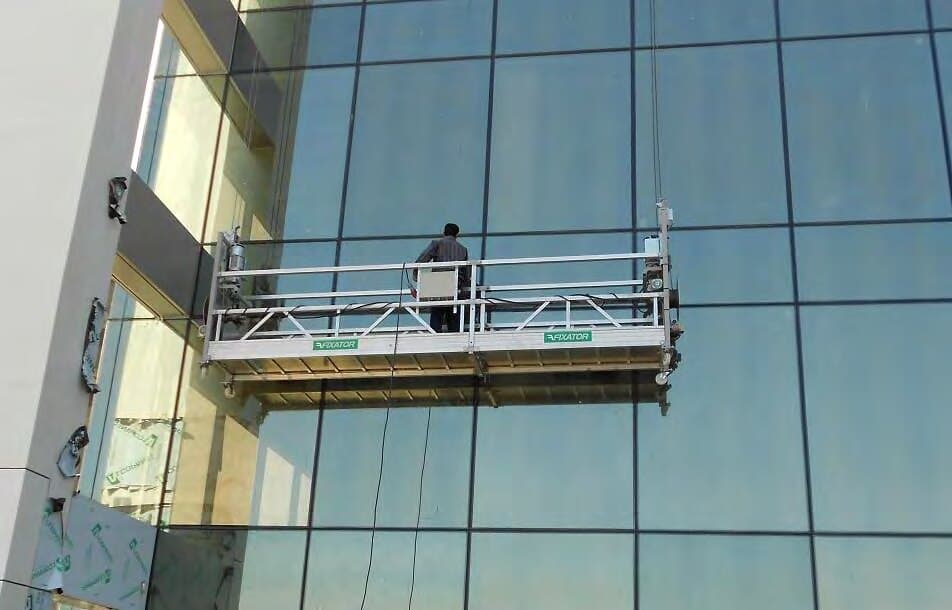
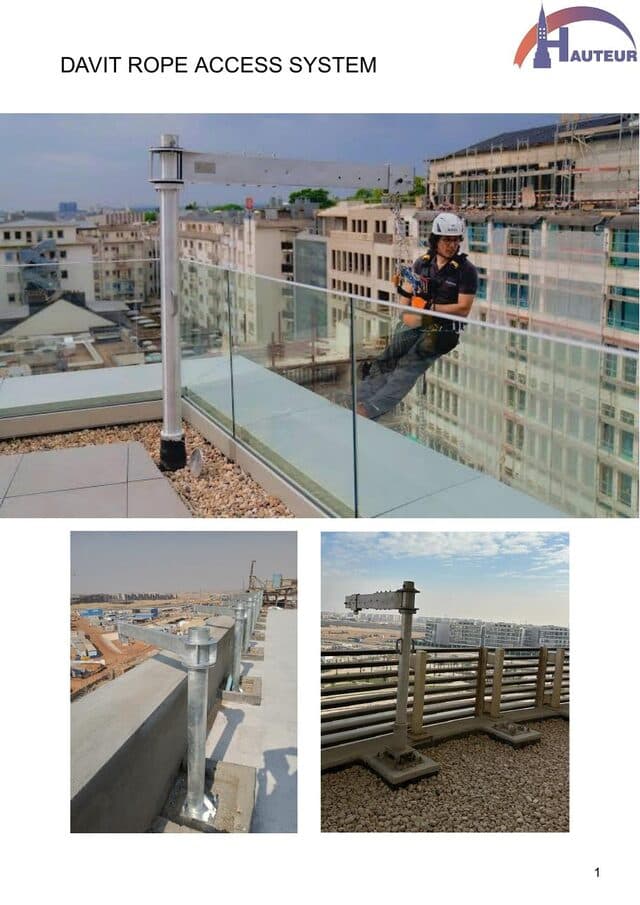
Removable davit arms on permanent roof sockets: models, socket heights, parapet brackets and layout spacing.
Download· PDF · 2.1 MB
Rope access suits many façades, especially where a BMU is impractical. For frequent cleaning of large glazed areas, a cradle-based system may be more efficient. Hauteur can compare both for your building.
Share the roof plan and the work that needs to be done. Hauteur will review the roof and recommend davit, rope-access, lifeline or anchorage positions.
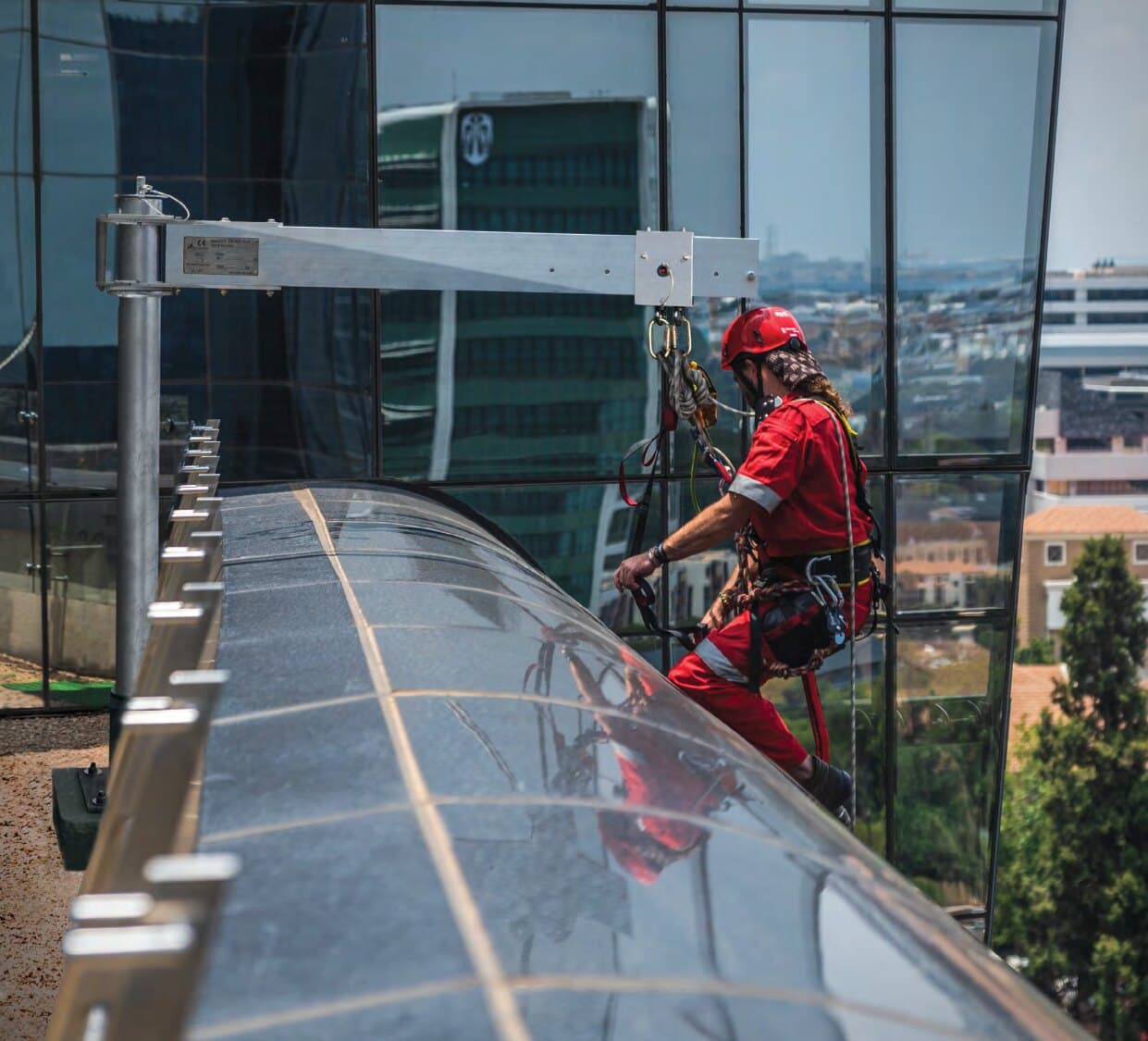
A removable davit is fixed to permanent sockets on the roof perimeter to suspend a worker for façade cleaning or maintenance. At the end of the work, the davit is dismantled and stored.
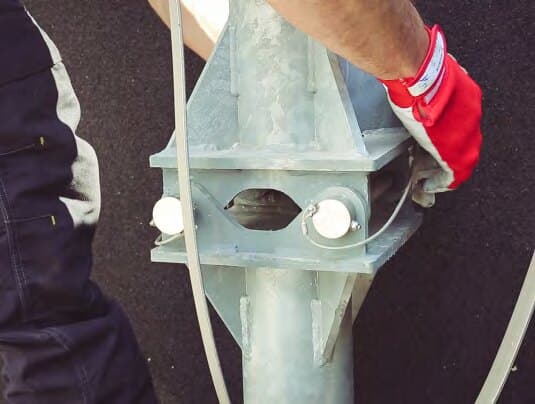
Permanent anchor points give rope-access teams and maintenance staff a secure, tested connection to the structure.
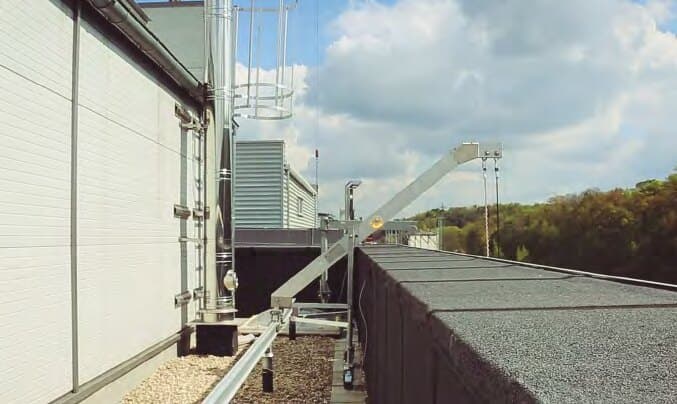
A horizontal lifeline gives workers a continuous attachment point as they move across a roof zone, without unclipping between anchors.