Special Access
Some surfaces cannot be reached by a standard roof car, monorail or davit. Hauteur designs and supplies access equipment for the specific geometry.
EgyptAir — TB3
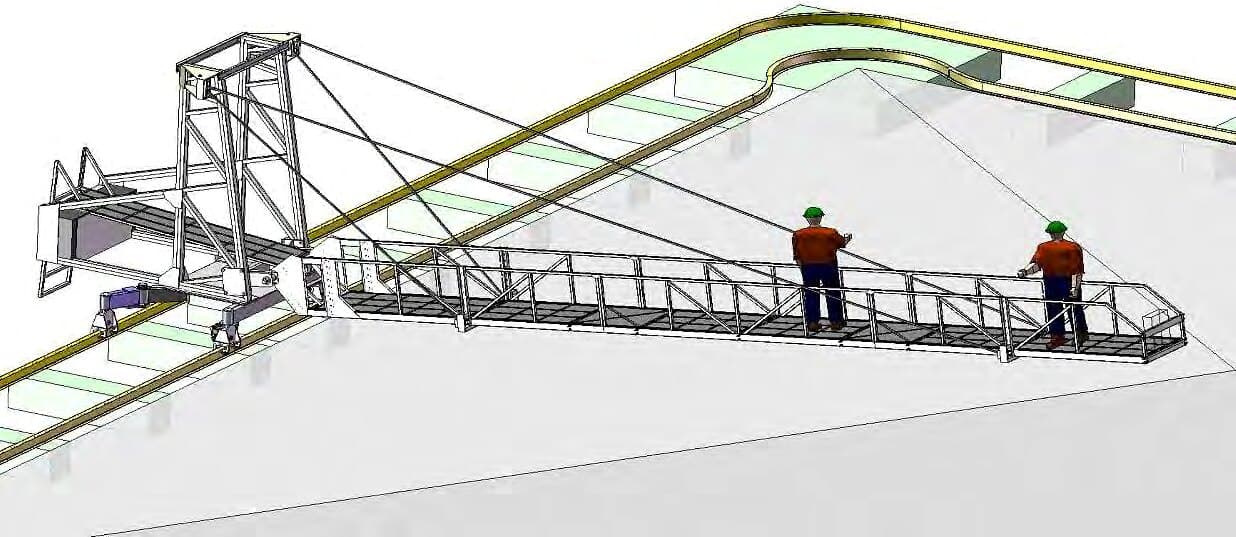
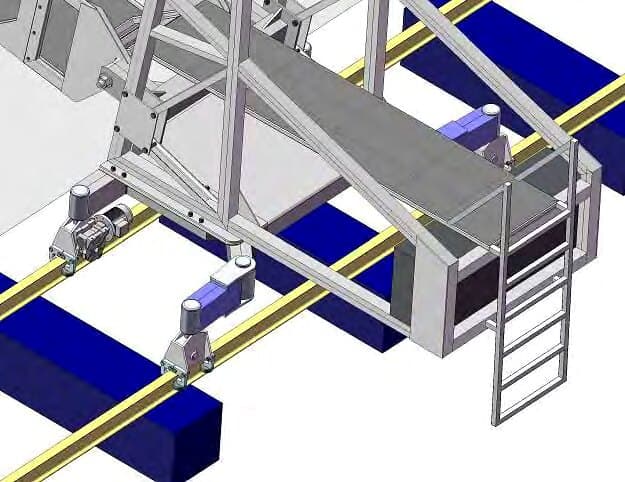
To clean the skylight pyramids at EgyptAir's TB3, Hauteur supplied and installed a 13 m traversing ladder gantry running on a double rail, with Mediterranean Contracting Co. as contractor. The portfolio marks it as a first in Egypt.
EMEC
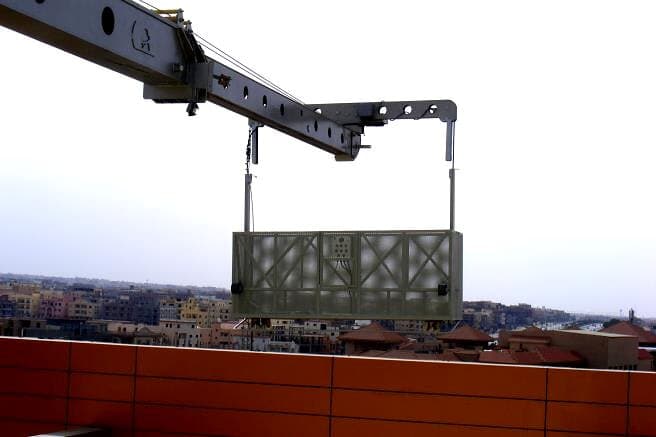
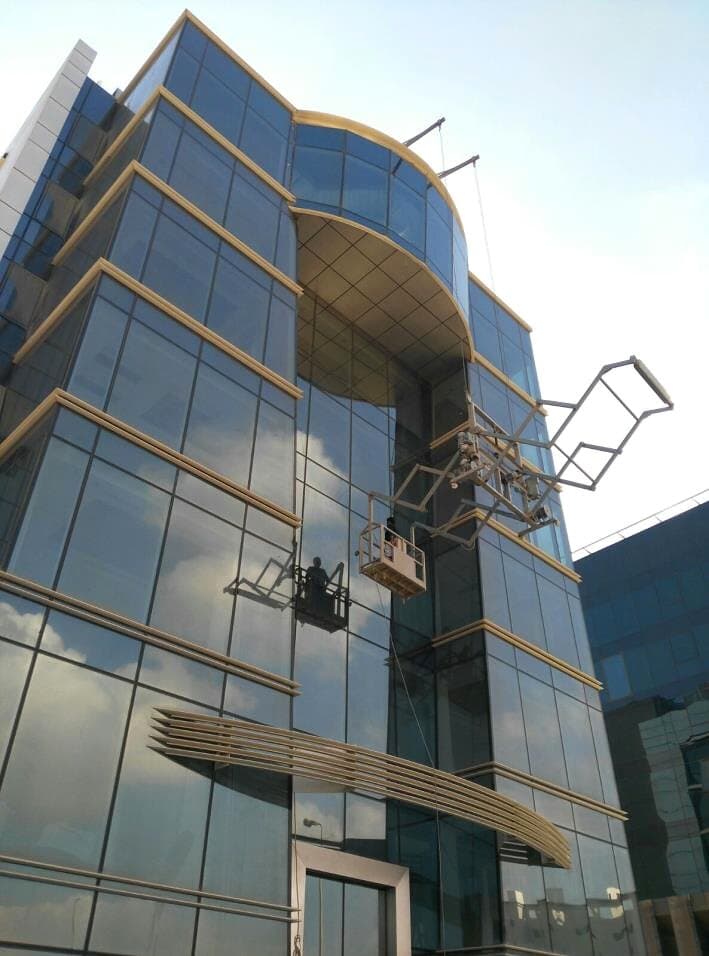
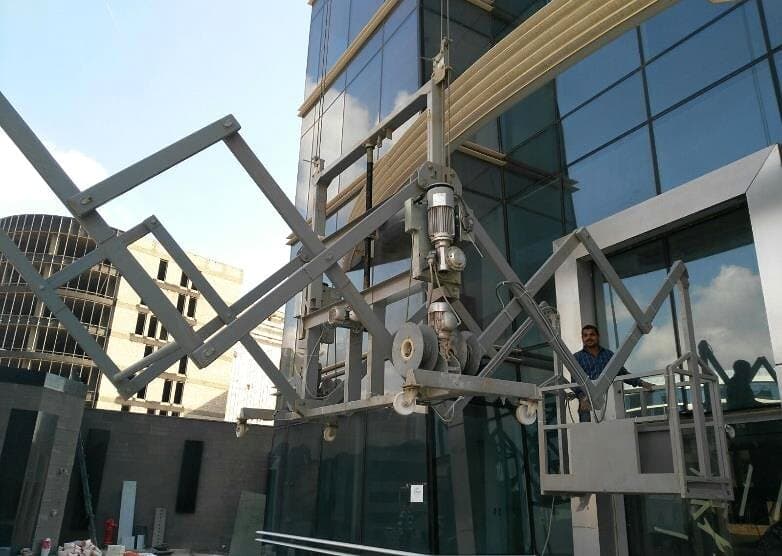
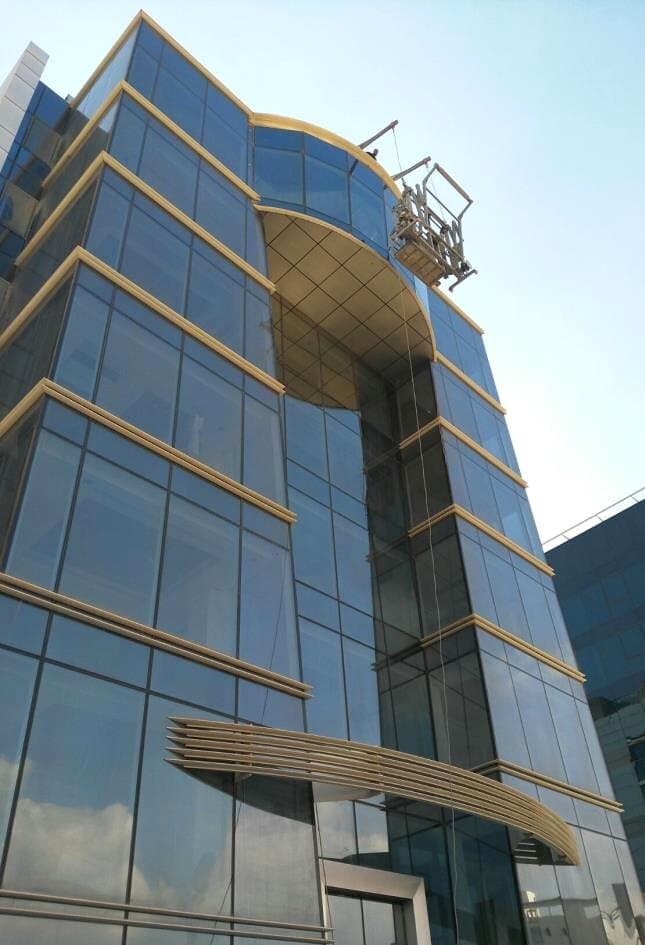
For the stepped glass façade of the EMEC building in New Cairo, a pantograph mechanism lets the cradle reach in toward set-back areas while suspended from davits.
Almasa Alamein Hotel
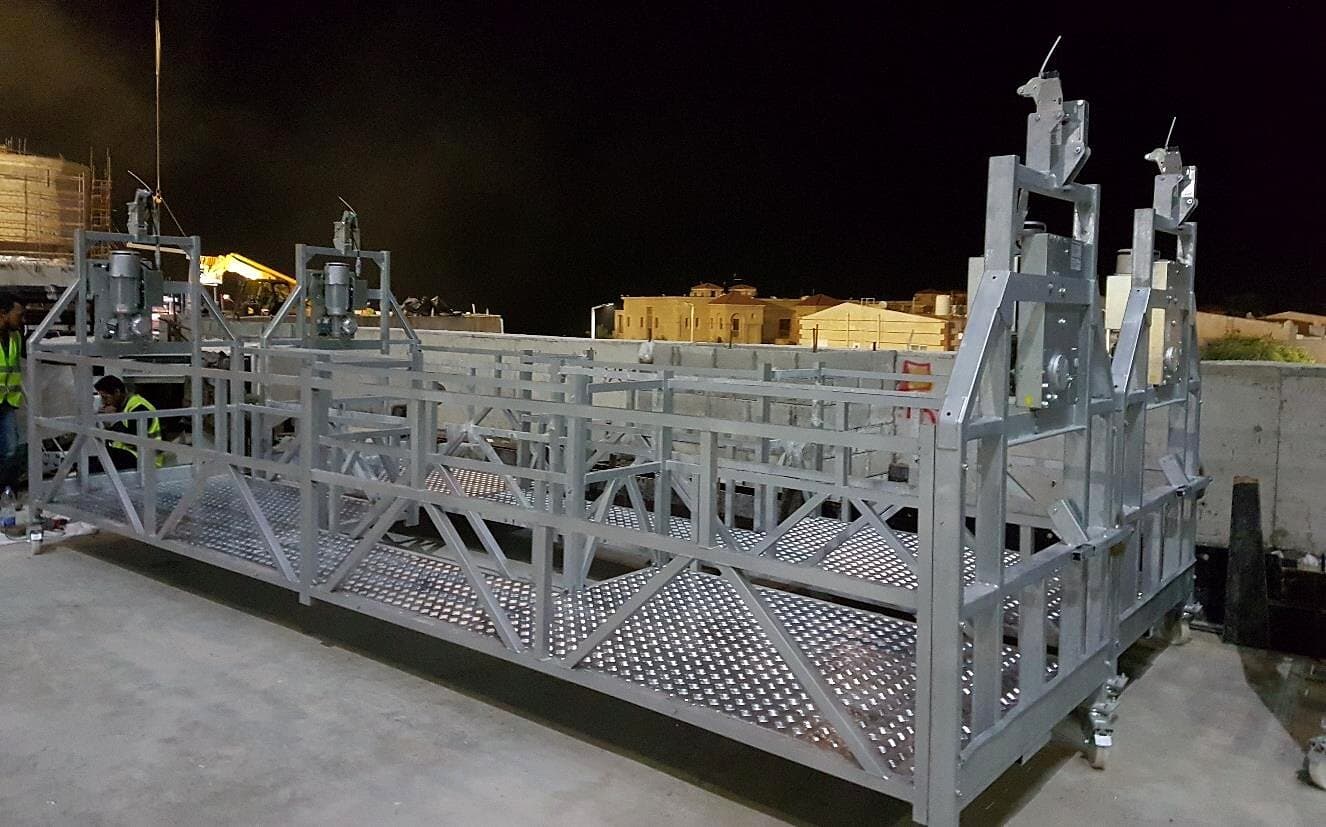
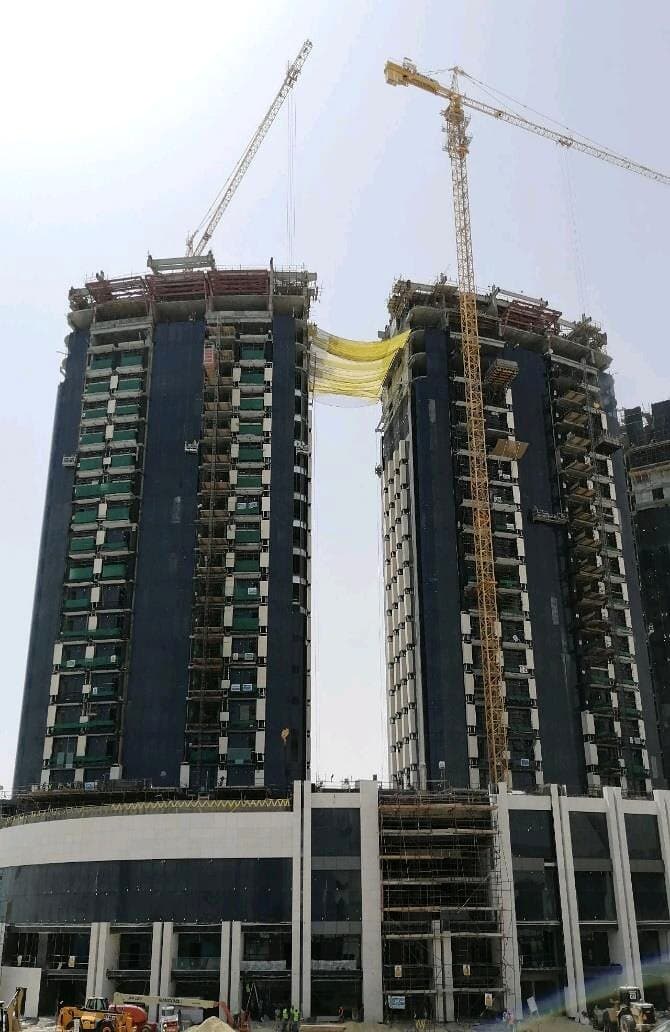
For Alico Egypt at the Almasa Alamein Hotel, Hauteur supplied and installed eight special cradles custom-designed for construction works on the towers.
Selected projects
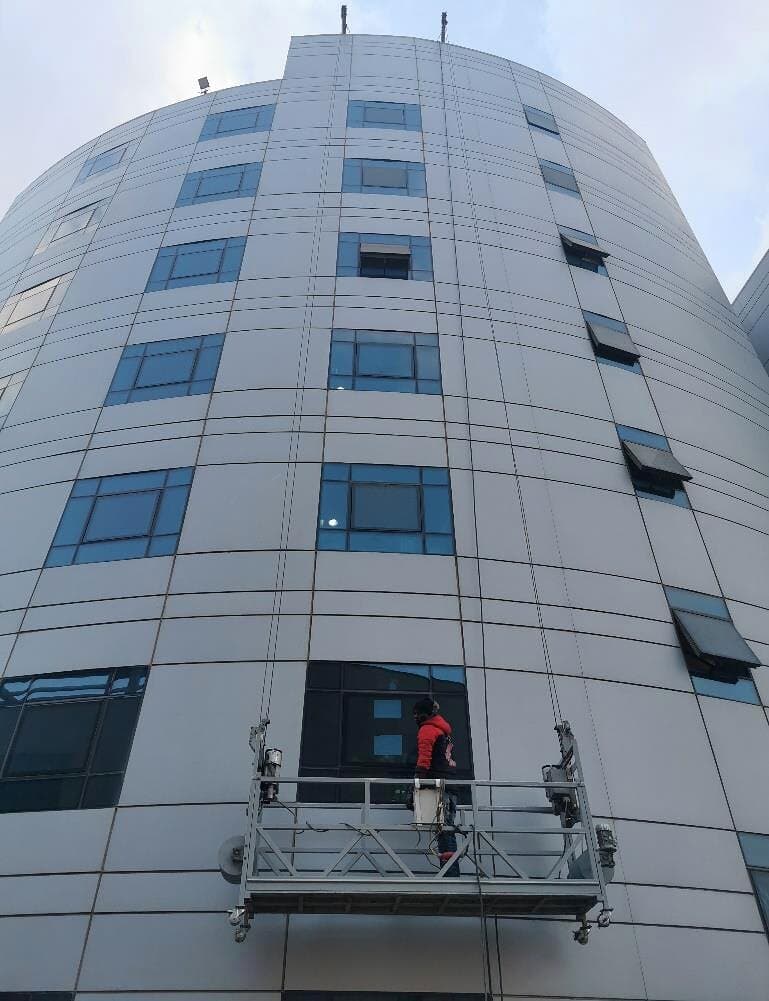
Cairo
Telescopic suspension system
View project
Hauteur's portfolio of façade-access projects: monorails, roof cars, davits, fixed-base systems, custom cradles and special access across Egypt.
Download· PDF · 11.5 MB
Roof plan, typical sections and elevations, building height and number of floors, façade materials and any roof equipment or set-backs. Early drawings are enough to start system selection; details are refined as the design develops.
Share the roof plan, elevations and building height. A Hauteur engineer will review the façade and recommend an access strategy.
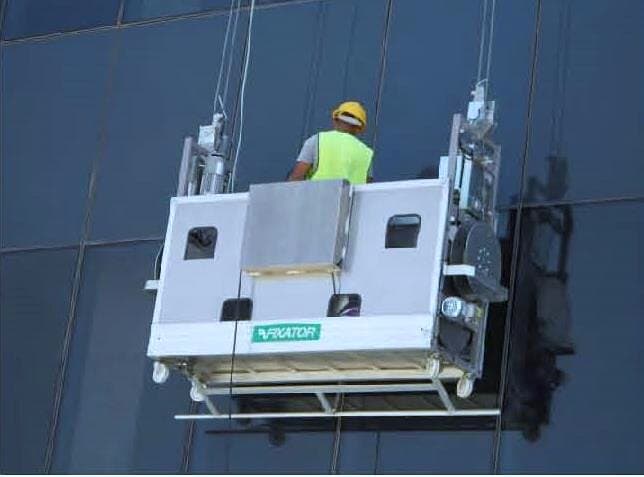
The cradle is where the work happens. Its length, controls and suspension are chosen to suit the façade, the task and the system it hangs from.
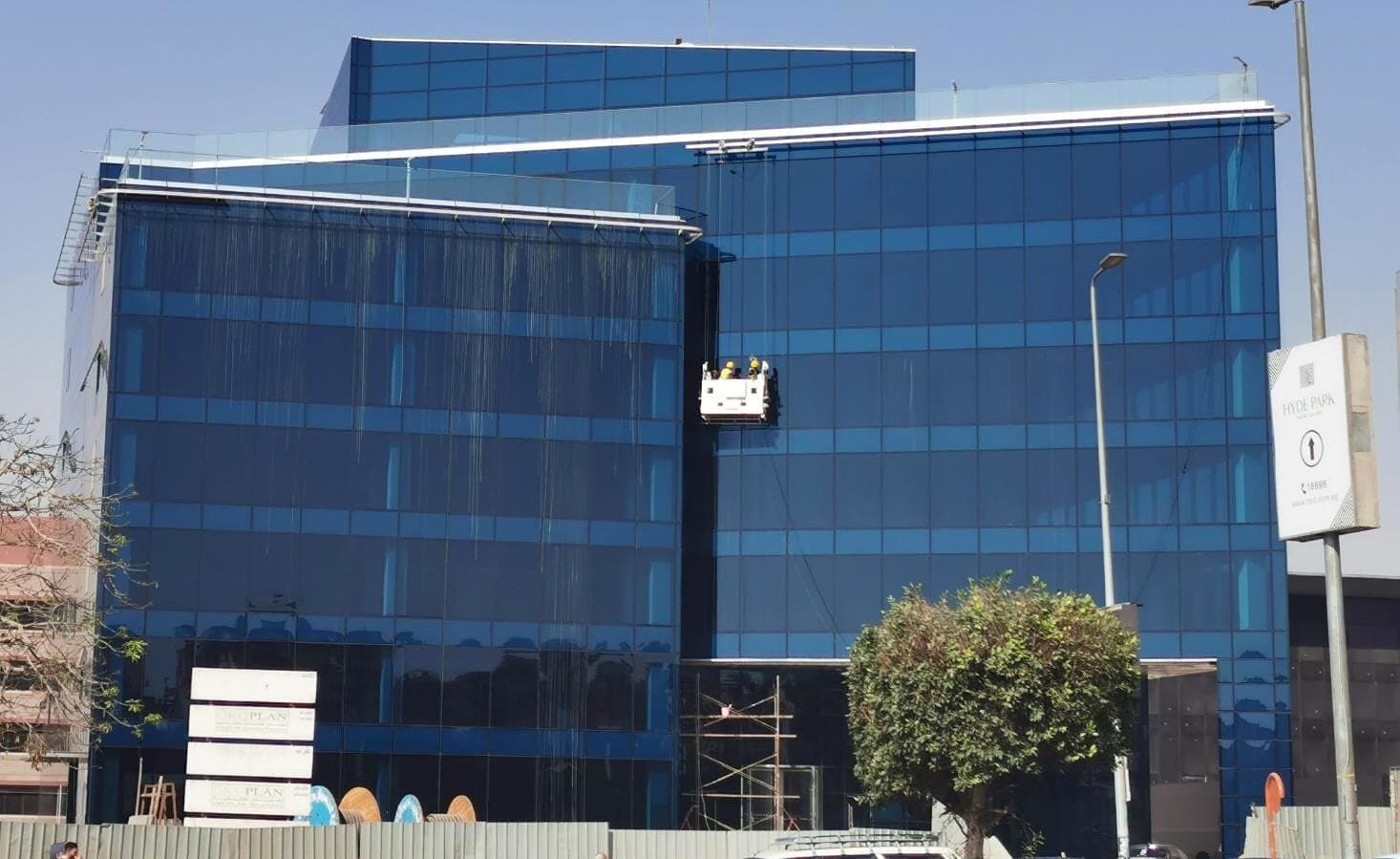
A track fixed to the building carries a trolley and a powered cradle along the façade — horizontally under the roof edge, or vertically on articulated elevations.
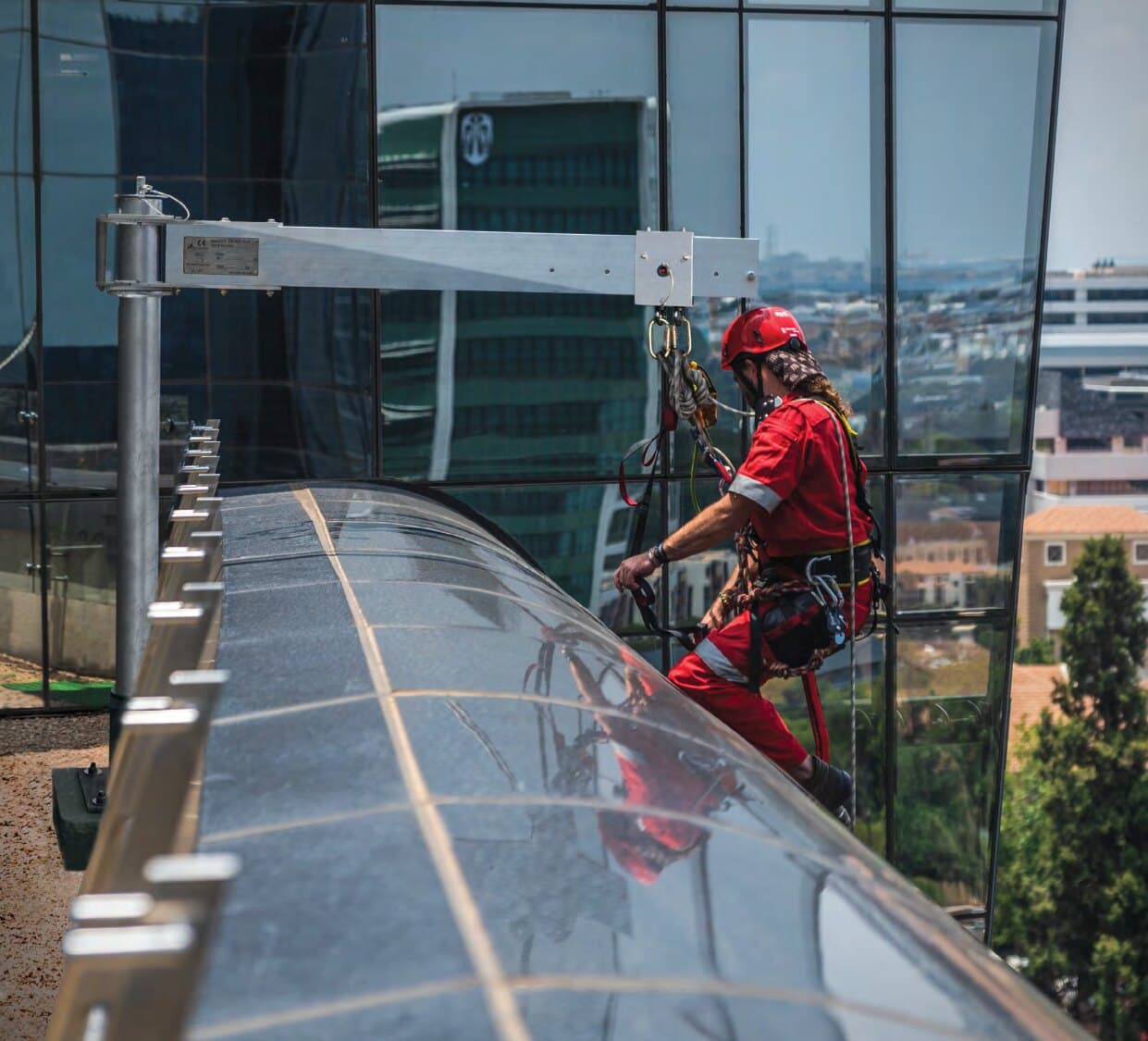
A removable davit is fixed to permanent sockets on the roof perimeter to suspend a worker for façade cleaning or maintenance. At the end of the work, the davit is dismantled and stored.